
Youth Sports Injuries: Understanding and Prevention
- Oct 17, 2025
- 2 min read
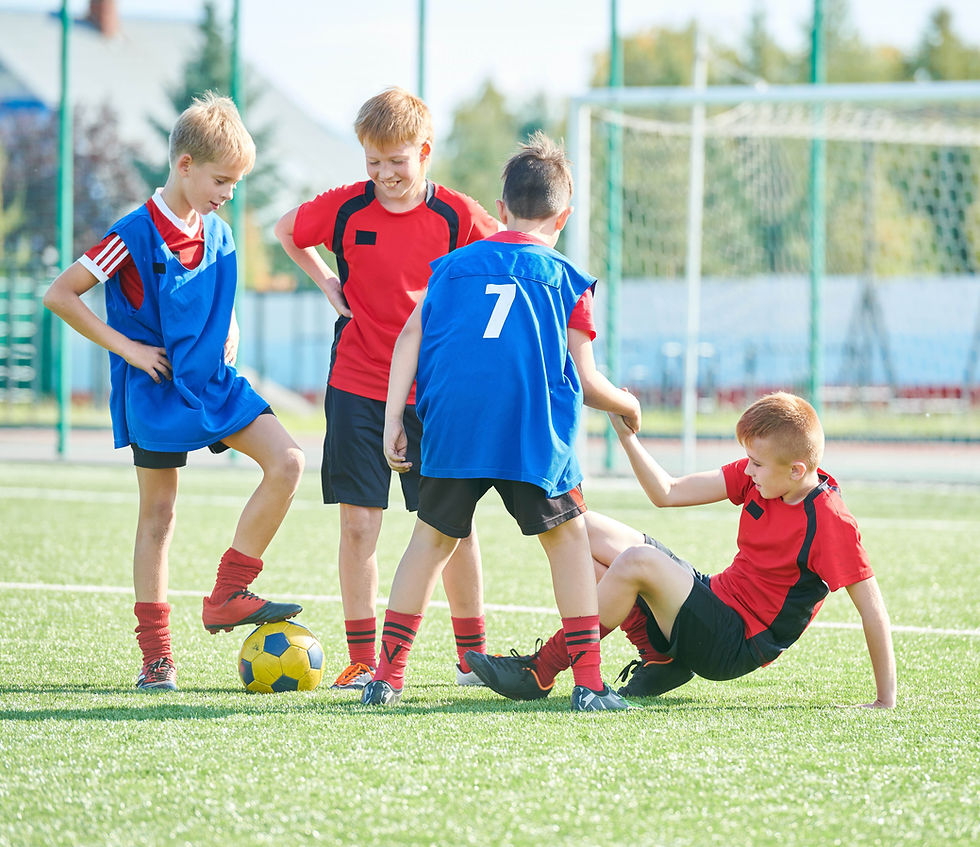
When it comes to injuries, children are not simply small adults. Their bodies are continually growing and changing. Depending on their age, kids’ bones may not be fully developed, which puts them at unique risk for certain injuries. Overuse injuries can become more severe during growth spurts, especially when children do not get enough rest.
Growth Plates and Tendon Differences
Children have tendons that are much more extensible than adults, but their bones are still growing and contain growth plates and apophyses (natural bone protuberances). This makes young athletes more prone to injuries involving their bones and growth plates. The relationship between their strong tendons and developing bones has been described as “steel cables joining together two bananas,” highlighting the fragility of their growing skeletons.
Benefits of Playing Different Sports Seasonally
Research indicates that kids who are multisport athletes – as opposed to kids who specialize in one, year-round sport – activate and strengthen different muscle groups in each activity, lowering their overall risk of injury. Each sport demands different muscle use, cardiovascular fitness, and requires a unique balance between strength and endurance. Additionally, they help build eye-hand coordination, agility, speed, and reaction time—skills that are transferable across sports. Seasonal sport variation also helps prevent burnout.
If your child has a summer or fall birthday, research shows that starting them in school at an older age compared to their classmates can provide advantages in size and maturity, which may benefit them as they play sports.
How Much Is Too Much Sports for Kids?
Determining the appropriate amount of sports participation for your child can be challenging. A common guideline states the number of hours a young person spends training and competing in a given week should not exceed their age. Other warning signs of
over participation include decreased performance in the sport and/or school, as well as persistent muscle or joint pain that does not resolve over time.
The Real Goal of Youth Sports
Participation in youth sports offers significant social, health, and academic benefits. However, it’s important to keep expectations realistic: the odds of becoming a professional athlete are very low (less than 1%). What’s more, only 1–5% of youth athletes will receive athletic scholarships to college, and just 1.5% of college athletes are drafted into professional leagues. The primary focus should be for your child to build confidence, develop social skills, learn teamwork and discipline, improve physical fitness, and, most importantly, have fun.
Let’s Keep Our Kids Game-Ready
If your child is experiencing overuse injuries or has other medical issues, talk to a healthcare provider at MI Partner Health. Our team is trained to evaluate and provide treatment options for kids of all ages. Contact us today at 616-320-0096.
Recommended Reads
“The Sports Gene: Inside the Science of Extraordinary Athletic Performance” and “Range: Why Generalists Triumph in a Specialized World” by David Epstein
“The Tyranny of Talent” by Joe Baker
“Changing the Game” and “Is It Wise to Specialize” by John O’Sullivan


Comments